Your Nose Knows More Than Your Tongue: The Secret Sense Behind Every Great Meal

Let's be honest. When most of us think about flavor, we picture the tongue — that wet, bumpy muscle doing its best to sort out sweet from salty, bitter from sour. We were taught this in grade school, probably with a diagram. Tongue tip for sweet, sides for salty, back for bitter. Done. Flavor explained.
Except that diagram was wrong. Or at least wildly incomplete.
Here's a number worth sitting with: scientists estimate that somewhere between 70 and 90 percent of what we perceive as taste is actually smell. Not the kind of smell where you sniff a bowl of pho before you eat it (though that's lovely too). We're talking about retronasal olfaction — the process where aromatic molecules travel from the back of your mouth up into your nasal cavity while you're chewing and swallowing. It happens without you noticing. It's been happening your entire life. And if you've never paid attention to it, you've been leaving a massive portion of your flavor experience on the table.
What Retronasal Olfaction Actually Means
Here's the quick science, promise it won't hurt. When you eat, your tongue picks up five basic signals: sweet, salty, sour, bitter, and umami. That's it. Five notes. But when you chew, you release volatile aromatic compounds from your food. Those compounds float upward through the nasopharynx — the passage connecting your mouth to your nose — and land on your olfactory receptors. Those receptors can distinguish somewhere between one trillion different scent combinations, according to research from Rockefeller University.
One trillion. Versus five.
Your tongue is playing a kazoo. Your nose is conducting a full orchestra. And most of us have been ignoring the orchestra entirely.
Sommeliers figured this out a long time ago. That exaggerated swirling and sniffing ritual you see at wine tastings isn't performance — it's technique. They're coating their olfactory epithelium with aromatic molecules before the wine even touches their tongue, essentially priming the brain to receive more complex flavor information. Then, when they sip and let the wine rest on the palate, they're tracking how the retronasal experience shifts. What opens up. What fades. What lingers.
Professional chefs do something similar, even if they call it by different names. "Tasting with your nose" is a phrase that floats around culinary school kitchens. It means learning to interpret what a dish smells like mid-cook — not just as a safety check (is this burning?) but as a diagnostic tool. Does this curry smell balanced? Is there enough brightness to cut through the richness? Has the raw garlic cooked out yet?
Why This Matters Especially for Global Cuisines
If you've ever tried to recreate a dish you had at a great Thai restaurant and ended up with something that tasted vaguely correct but somehow flat, retronasal olfaction is probably part of the mystery. Thai cooking is built on aromatic layering — lemongrass, galangal, kaffir lime leaves, Thai basil, fish sauce — and those ingredients aren't just about taste. They're about volatile compounds that bloom at different temperatures and carry differently through the retronasal pathway.
Same goes for Italian cooking. A properly made soffritto — onion, celery, carrot, slowly coaxed in olive oil — smells like an entirely different thing at five minutes versus twenty-five minutes. The Maillard reaction is happening, sugars are caramelizing, sulfur compounds from the onion are transforming. A trained nose can tell when the soffritto is ready without looking at it. A beginner is guessing.
This is why grandmothers in every culture seem to cook without recipes. They're not guessing. They're reading aromatic cues that took years to internalize. The good news? You can start building that same vocabulary right now, and it doesn't take years — it just takes intention.
Three Exercises You Can Try This Week
1. The Pause Before the Bite Before you eat your next meal — any meal, even a sad desk lunch — stop for five seconds and breathe in through your nose. Not a dramatic theatrical sniff. Just a slow, deliberate inhale. Notice what's there. Is it sharp? Sweet? Earthy? Funky? Now eat. Pay attention to whether the flavors match what your nose predicted. Over time, this simple pause trains your brain to integrate olfactory and gustatory signals more consciously.
2. The Pinch Test This one is a classic used in sensory science classes. Eat a small piece of something flavorful — a cube of aged cheddar, a piece of dark chocolate, even a potato chip — while pinching your nose shut. Chew. Notice what you taste. Now release your nose while the food is still in your mouth. That sudden rush of flavor you experience? That's retronasal olfaction switching back on. It's a genuinely startling demonstration of how much your nose contributes.
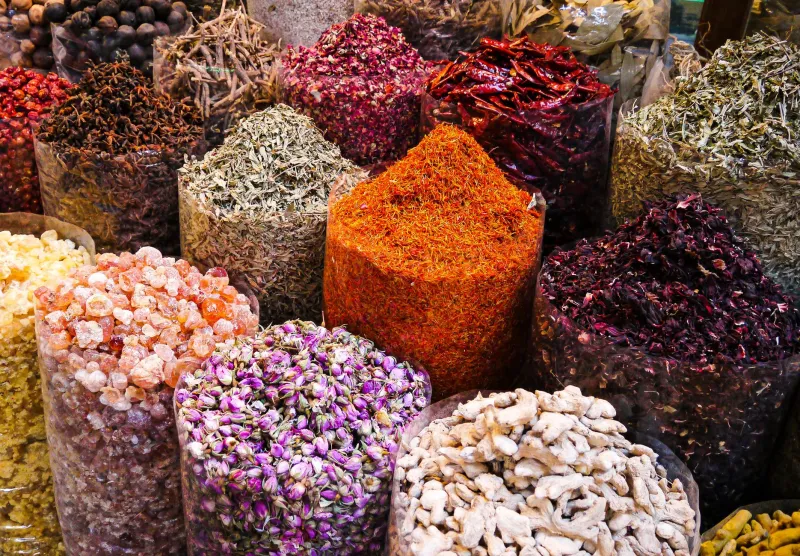
3. The Spice Smell Journal Open your spice cabinet and smell each jar individually — not to identify them (you already know what they are), but to find words for what you're experiencing. Is cumin dusty or warm? Is cardamom floral or medicinal? Is smoked paprika sweet or leathery? Write it down. This builds an internal aromatic library that you'll unconsciously start referencing when you cook. It's the same exercise perfumers use to train their "nose," and it works for food too.
The Cold and the Obvious
There's a reason food tastes different when you have a cold. It's not your taste buds — those are fine. It's that congestion physically blocks aromatic molecules from reaching your olfactory receptors. You're down to those five basic tongue signals, and suddenly everything tastes like cardboard. That miserable experience is actually the clearest possible illustration of how central smell is to flavor. You've experienced this. You just maybe never connected the dots.
The COVID-19 pandemic brought this into sharp, painful focus for millions of Americans who lost their sense of smell — a condition called anosmia. Food writers, chefs, and home cooks suddenly found themselves unable to taste in any meaningful sense, even when their tongues were perfectly functional. The conversations that followed, in food media and beyond, did more to popularize the science of olfaction than decades of academic papers.
Cooking With Your Whole Head
Learning to trust your nose changes how you shop, how you cook, and how you eat. At a farmers market, you start squeezing peaches and basil bunches not just out of habit but because you're actually reading information. At the stove, you stop relying so heavily on timers and start using your nose as a real-time status update. At the table, you slow down — not because you're trying to be mindful in some vague Instagram sense, but because there's genuinely more to notice.
Global cuisines have always known this. The aromatic traditions of Indian cooking, the herb-forward freshness of Vietnamese cuisine, the smoke and char of Mexican food — these aren't just flavor strategies. They're sophisticated olfactory experiences designed to engage the full spectrum of human perception.
Your tongue is a good starting point. But your nose? That's where swaad — real, deep, soul-satisfying flavor — actually lives.