When the Map of Flavor Moves: How a Warming Planet Is Reshaping Where Your Spices Actually Grow
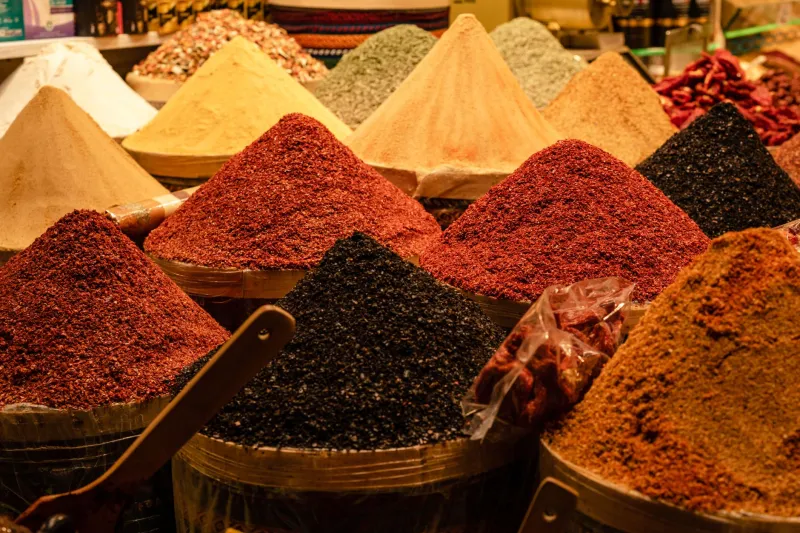
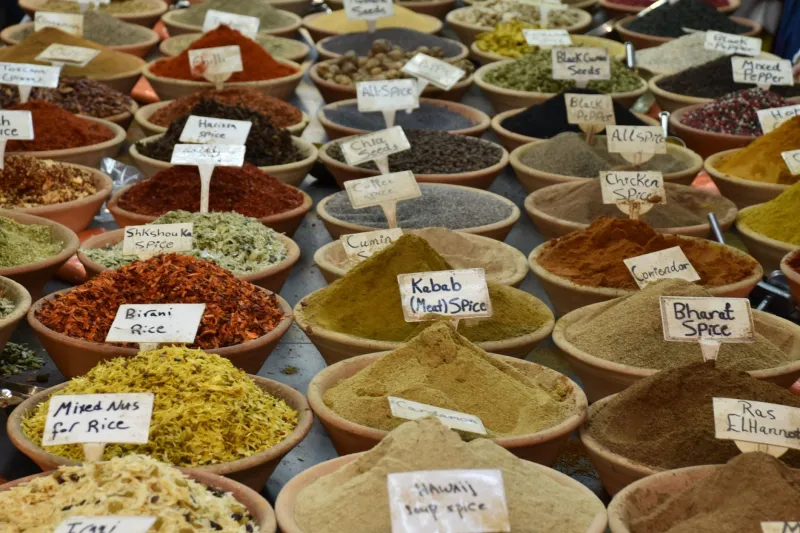
There's a small tin of cardamom pods sitting on a shelf in my kitchen. The label says "Product of India" — which, for most of us, is exactly what we'd expect. India's Kerala and Karnataka regions have been producing some of the world's finest green cardamom for centuries. It's woven into the culture, the cuisine, the very smell of the country's bustling spice markets. But here's the thing: that label might start to look a lot more complicated in the years ahead.
Climate change isn't just an environmental story. For food lovers and home cooks, it's increasingly becoming a flavor story — one that's quietly rewriting the origins of the ingredients we've always taken for granted.
The Ground Beneath the Spice
If you've ever heard the word "terroir" tossed around at a wine tasting and thought it was just fancy talk, hold on — because it actually matters here. Terroir refers to the way a plant's flavor is shaped by the specific combination of soil composition, altitude, rainfall patterns, and temperature swings in the place where it grows. It's why Darjeeling tea tastes different from Assam tea even though both come from the same country. It's why Tellicherry black pepper from India's Malabar coast has a depth that generic "black pepper" just doesn't quite replicate.
Spices are especially sensitive to these conditions. Cardamom, for instance, thrives in a very narrow band of elevation — typically between 2,500 and 5,000 feet — with specific humidity levels and forest canopy cover. Shift those variables even slightly, and you change the essential oil composition of the pod. That means you change the flavor.
Right now, rising temperatures and erratic monsoon patterns are doing exactly that across traditional spice-growing regions. Farmers in Kerala are watching cardamom yields decline. Vanilla growers in Madagascar — which produces roughly 80% of the world's supply — have been battered by increasingly intense cyclones. Saffron cultivation in Iran and Kashmir is being squeezed by drought. These aren't distant abstractions. They're the supply chain behind your grocery store's spice aisle.
New Frontiers, New Flavors
Here's where it gets genuinely fascinating, if a little unsettling: as traditional regions struggle, other places are stepping up. Cardamom cultivation is expanding in Guatemala, which has actually become the world's largest exporter by volume — a fact that surprises most people who assume India holds that title. And now, researchers and farmers are eyeing regions in East Africa, parts of Southeast Asia, and even some higher-altitude areas of Central America as viable growing zones for spices that once seemed geographically fixed.
Vanilla is seeing similar shifts. While Madagascar remains dominant, producers in Uganda, Papua New Guinea, and even parts of Hawaii and California are scaling up. Ethiopian black cardamom is gaining ground. Turmeric, long centered in India, is being cultivated in Peru and parts of sub-Saharan Africa.
For adventurous home cooks, this is genuinely exciting territory. A Guatemalan cardamom pod tends to have a slightly more eucalyptus-forward, almost camphorous note compared to the more floral, complex profile of Indian green cardamom. Ugandan vanilla carries a different aromatic balance than the creamy, rum-adjacent depth of a Madagascan bean. These aren't inferior products — they're different products, with their own personalities.
But here's the tension: when you're making a traditional Kerala chai, or a Persian rice dish that depends on the specific warmth of Iranian saffron, does the substitute deliver the same experience? That's a question without a clean answer.
What This Means When You're Standing in the Spice Aisle
For most American home cooks, spice shopping has always been a bit of a black box. You grab the jar, you check the price, maybe you look for "organic," and you move on. But the origin story printed on that label is becoming more meaningful — and also more complicated — than ever before.
Some brands are responding by being more transparent about sourcing. Small-batch spice companies like Burlap & Barrel and Diaspora Co. have built their entire brand identity around single-origin, farmer-direct sourcing with full traceability. That kind of transparency lets you know not just the country, but the specific farm or cooperative your spice came from. As growing regions shift, these companies are also among the first to adapt — sometimes introducing customers to new origin stories before the mainstream market catches on.
Larger commercial spice brands, meanwhile, often blend from multiple origins to maintain consistency. That's not necessarily dishonest, but it does mean you're getting a standardized average rather than a specific place's expression of a flavor.
If authenticity matters to you — and if you cook from specific cultural traditions, it probably does — it's worth starting to pay attention to origin labels with fresh eyes. A jar that says "cardamom" without specifying origin is a very different product than one that says "green cardamom, Idukki District, Kerala." And as climate pressures mount, that distinction will only become more important.
The Farmers Caught in the Middle
It would be easy to treat this as purely an intellectual exercise in flavor geography. But behind every shifting supply chain is a farming community whose livelihood is being upended. Spice farming in places like Kerala, Madagascar, and Kashmir often involves smallholder farmers — families working relatively small plots, dependent on stable seasonal patterns that are becoming anything but stable.
When yields drop, prices spike. When prices spike unpredictably, supply chains scramble. When supply chains scramble, quality control often suffers. The ripple effect lands, eventually, in your kitchen.
Supporting single-origin and direct-trade spice brands isn't just a flavor decision — it's a way of keeping money closer to the farmers navigating these disruptions. It's not a perfect solution, but it's a meaningful one.
Tasting the Shift
If you want to start exploring this in a hands-on way, try doing a side-by-side comparison of cardamom from different origins — Indian versus Guatemalan is the easiest to find in the US. Brew two small batches of chai using identical recipes and see what you notice. It's a genuinely eye-opening exercise, and it turns an abstract geopolitical story into something you can actually taste.
The spice route has always been a living thing — it shifted with trade winds, empires, and economics. Climate change is just the latest force bending it in new directions. Some of those new directions will surprise you. Some might even delight you. But understanding where your flavors actually come from — and why that's changing — is the kind of knowledge that makes you a more curious, more connected cook.
And at Have Some Swaad, that's kind of the whole point.