Your Spice Rack Has a History Problem — And It's More Interesting Than You Think
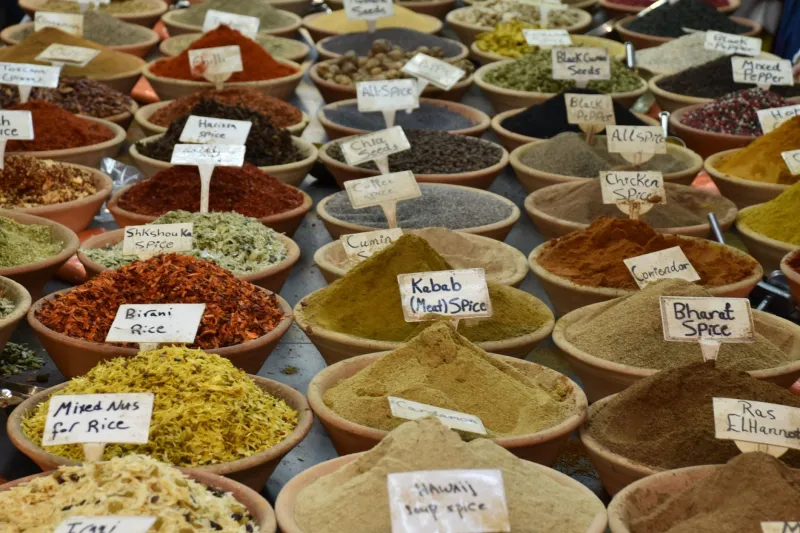
Open your spice cabinet right now. Go ahead. You've probably got black pepper, cinnamon, cumin, maybe some turmeric if you've been paying attention to wellness trends. There's likely a jar of paprika that's been sitting there since 2021, and if you're feeling adventurous, maybe some cardamom you bought for a single recipe and never used again.
Here's the thing nobody puts on the label: that collection isn't random. It isn't purely a reflection of your personal taste, or even American food culture in any organic sense. It is, in large part, the direct result of supply chains, trade agreements, and market forces that were set in motion hundreds of years ago — and that have never really stopped running.
The spice trade didn't end. It just got quieter.
How Empires Decided What You Season With
The original spice trade is the kind of story that sounds like it belongs in a history class, not a food blog. But stay with us, because it connects directly to what you're cooking for dinner tonight.
For centuries, European colonial powers — Portugal, the Dutch, the British — didn't just want spices for their own kitchens. They wanted control. The Dutch East India Company famously monopolized nutmeg and cloves out of the Banda Islands in Indonesia, going to genuinely brutal lengths to keep supply tight and prices high. The British did something similar with Indian pepper, cinnamon from Sri Lanka, and eventually tea. These weren't just culinary preferences. They were economic weapons.
What that era left behind was a global infrastructure — shipping lanes, trade relationships, import networks — that continued long after colonialism officially ended. The countries and corporations that had already built those pipelines kept using them. And the spices that had been prioritized for export, the ones that were already moving in high volumes through established channels, stayed dominant in Western markets.
Black pepper, for example, is now so ubiquitous in American cooking that we barely think of it as a spice anymore. It's just... there. On every restaurant table. In every recipe. But that omnipresence wasn't inevitable. It was manufactured, over centuries, by the same forces that made fortunes off controlling its supply.
The Grocery Store Aisle Isn't Neutral
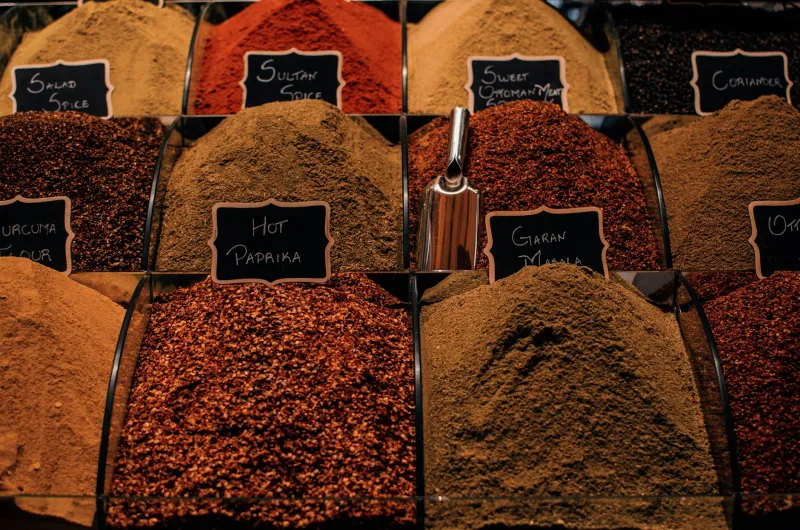
When you walk into a mainstream American grocery store and head to the spice section, what you're looking at is a curated selection — curated not just by the store, but by a relatively small number of major spice companies. McCormick alone controls a significant chunk of the US spice market. These companies have their own sourcing relationships, their own preferred growing regions, and their own economic incentives for keeping certain spices front and center.
That's not a conspiracy theory. It's just business. But it has real consequences for what flavors feel "normal" to American home cooks and which ones feel exotic or intimidating.
Take long pepper, for instance. It predates black pepper in European cooking and has a more complex, almost floral heat. It's still used widely in parts of South Asia, North Africa, and Southeast Asia. But it's nearly invisible in American supermarkets because it was essentially replaced by black pepper once colonial trade networks decided that's what they were moving. You can find it if you look — specialty spice shops, online retailers like Burlap & Barrel or Diaspora Co. — but it requires effort that black pepper never does.
Same story with grains of selim, the West African spice with a smoky, musky depth that's central to many traditional dishes but almost unknown here. Or with Tasmanian pepperberry, or Indonesian andaliman, or dozens of other regional spices that never made it into the colonial export pipeline and therefore never made it into your cabinet.
The Economics of Accessibility
Here's where it gets a little uncomfortable: the spices that are cheap and easy to find in the US are often cheap because of ongoing economic imbalances that trace back to colonial structures. Many spice-producing countries — in South Asia, Southeast Asia, Latin America, East Africa — are still operating within trade frameworks that keep raw ingredient prices low while value-added processing happens elsewhere. The farmer growing your vanilla beans in Madagascar is often not the one capturing most of the economic value in that supply chain.
This matters for home cooks not because you're personally responsible for global trade policy, but because it shapes what you perceive as affordable and normal. When a jar of generic cinnamon costs $2 and a jar of single-origin Ceylon cinnamon costs $8, most people reach for the $2 jar without thinking twice. But that price difference isn't just about quality — it's about which product has centuries of infrastructure behind it, and which one is trying to build a market from scratch.
Companies like Diaspora Co., Burlap & Barrel, and Curio Spice are doing genuinely interesting work here, sourcing directly from farmers at fairer prices and bringing in varieties that the mainstream market has ignored. It costs more. But it's also how you start to break out of the flavor ruts that colonial supply chains have nudged you into.
So What Do You Actually Do With This?
None of this means you need to feel guilty every time you reach for black pepper. That would be exhausting, and also kind of missing the point. The more interesting response is curiosity.
Start asking what else is out there. The next time a recipe calls for generic "cinnamon," consider whether it means the cassia cinnamon that dominates American shelves (bold, slightly harsh, great for baking) or the softer, more nuanced Ceylon variety from Sri Lanka. They're genuinely different ingredients, and knowing that opens up a new dimension in your cooking.
Seek out a spice shop that isn't just a repackager of bulk commodity spices. In most major American cities, there are shops — often run by immigrant communities — that carry regional varieties you won't find at the chain grocery store. These places are worth the trip.
Explore the spices that didn't make it into the export pipeline. Long pepper. Grains of selim. Timur (Nepalese Sichuan pepper). Urfa biber. Mahleb. These aren't obscure for any culinary reason — they're obscure because history made different choices than taste did. That means there's a lot of flavor sitting just outside the mainstream, waiting.
The Spice Trade Is Still Running — You're Just a Customer Now
The history of the spice trade is dramatic, violent, and genuinely world-altering. But its legacy isn't just in history books. It's in the layout of your grocery store's spice aisle, in which flavors feel familiar and which feel foreign, in what's cheap and what requires a special trip.
The good news is that awareness is the first step to cooking differently. Once you see the patterns, you can start making choices that are more intentional — not just about flavor, but about where your ingredients come from and whose culinary traditions you're actually engaging with.
Your spice rack has a history. It's more interesting than the labels suggest. And the most delicious thing you can do is start exploring what got left out.