Why Your Grandmother's Cooking Tasted Better (And How to Finally Figure Out Her Secret)
You know the feeling. You're standing at the stove, stirring something that smells pretty close, looks exactly right, and yet — when you taste it — it's missing that thing. That unnamed, almost ghostly quality that made your grandmother's version of the same dish feel like a warm hand on your shoulder.
Food scientists have a term for this: flavor memory. And it turns out, chasing it is one of the most deeply human things a home cook can do.
The Science Behind Why Certain Foods Hit Different
Our brains are wired to link taste and smell directly to memory and emotion — more so than any other sense. The olfactory bulb, which processes smell, sits right next to the hippocampus and amygdala, the parts of your brain responsible for memory and emotional response. That's not an accident. It's why one whiff of something frying in a cast iron pan can transport you back to a Sunday morning kitchen twenty years ago.
But here's the thing: what you're remembering isn't just flavor. You're remembering context — the time of day, who was there, the sound of a particular radio station, the feeling of being taken care of. That emotional scaffolding is part of the dish itself, even if it can't go into a recipe card.
So when you try to recreate Grandma's red beans and rice, or your Lola's adobo, or your Nani's dal, and it doesn't quite land — it's not always because you're missing an ingredient. Sometimes you're missing the story behind it.
What's Actually Hidden in Traditional Recipes
Here's where it gets interesting from a culinary standpoint. Traditional home cooks — especially those from cultures where recipes were passed down orally — didn't think in measurements. They thought in ratios, textures, smells, and sounds. They knew the oil was ready when it shimmered a certain way. They salted by feel. They cooked onions until they were done, not until the timer went off.
What gets lost when those techniques aren't explicitly written down isn't the ingredient list. It's the technique logic — the why behind each step.
Take the Maillard reaction, for example. When you brown meat or caramelize onions, hundreds of new flavor compounds form that don't exist in the raw ingredients. If your grandmother always took the time to brown her sofrito low and slow until it was almost jammy, that's not just preference — that's building a flavor base that you can't replicate by rushing it. Swap that step out for a five-minute sauté and the whole dish shifts.
Similarly, acids — a squeeze of lemon, a splash of vinegar, a spoonful of tamarind — are often used intuitively in traditional cooking to brighten and balance. They don't make a dish taste sour. They make every other flavor taste more like itself. If that step is missing from your written-down version, the whole thing can taste flat without you being able to pinpoint why.
How to Start Decoding Your Own Flavor Memories
The good news: this is actually a solvable puzzle, and working through it is genuinely one of the most rewarding things you can do in the kitchen.
Start by writing down the sensory details, not just the ingredients. What color was the dish when it was done? Was the sauce glossy or matte? Did the meat pull apart or slice cleanly? These observations tell you a lot about technique — fat content, cook time, acidity levels.
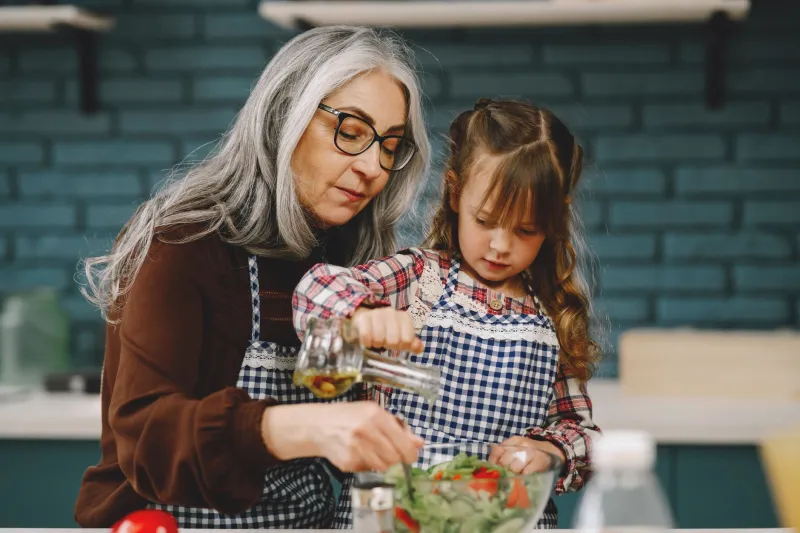
Talk to the source, if you still can. If the cook who made the dish is still around, don't ask for the recipe. Ask them to cook it while you watch. Better yet, cook alongside them and pay attention to the moments where they deviate from what they're telling you. Those instinctive adjustments are the recipe.
Look for the ghost ingredients. These are the things that don't make it onto recipe cards because the cook never thought of them as ingredients — the bacon grease saved in a jar by the stove, the dried peppers hung in the kitchen that ended up in everything, the specific brand of soy sauce that was always in the pantry. Regional and generational ingredient choices matter enormously. A Southern cook using Duke's mayo is making a fundamentally different dish than one using Hellmann's, even if the recipe is identical.
Reverse-engineer with your palate. Take a bite and ask: What's the dominant flavor? What's the supporting one? Is there something earthy underneath everything? Something slightly bitter? Something that lingers? Working backwards from sensation to ingredient is a skill, and it gets sharper with practice.
The Role of Fat, Time, and Heat
If there's a holy trinity of ghost ingredients in traditional cooking, it's these three. Fat carries flavor and creates mouthfeel — the difference between a dish cooked in schmaltz versus vegetable oil is enormous, even if you can't name exactly why. Time allows flavors to develop, meld, and deepen in ways that shortcuts simply can't replicate. And heat — specifically, the specific kind of high, dry heat or low, wet heat a dish is meant to have — determines the entire character of what ends up on the plate.
Your grandmother's pot roast probably cooked for four hours because it needed to. Not because she had nothing better to do.
Recreating Without Replicating
Here's a mindset shift that might help: stop trying to make an exact copy and start trying to make something true to the original. Understand what the dish was trying to accomplish — comfort, celebration, resourcefulness, preservation of culture — and cook toward that intention.
If the original used lard and you're not going to use lard, understand what lard was doing in the dish (richness, a particular savory depth) and find something that gets you closer to that effect than just skipping it entirely. Butter, duck fat, and even a small amount of coconut oil can approximate different aspects of that quality depending on the dish.
And accept that your version will be yours. The flavor memory you create for the people eating at your table tonight will be their ghost ingredient someday. That's not a consolation prize. That's the whole point.
One Last Thing
The dishes we miss most aren't usually the most technically complex ones. They're the ones made with the most attention — the ones where someone stood at a stove and paid close, patient, loving attention to what was happening in the pot. You can't bottle that. But you can bring it with you every time you cook.
And sometimes, that's exactly what makes it taste right.