From Niche to Necessary: How Asian Condiments Took Over the American Pantry
There's a jar of gochujang in the back of millions of American refrigerators right now. Some of those people know exactly what to do with it. Others bought it on a whim after watching a cooking video, used it once, and then forgot about it — until the next Tuesday night dinner panic hit and suddenly that deep red paste became the most important thing in the kitchen.
Either way, the fact that it's there is the story.
American home cooks have been quietly staging a flavor revolution, and the weapons of choice are fermented, funky, salty, and deeply savory condiments that have been staples across Asia for centuries. Gochujang from Korea. Miso from Japan. Fish sauce from Thailand and Vietnam. Doubanjiang from China. These aren't trendy additions to a chef's tasting menu anymore — they're weeknight pantry essentials for a growing number of everyday cooks who've figured out that depth of flavor doesn't have to come from hours of simmering.
How Did We Get Here?
The story doesn't start at a farmers' market or a food festival. It starts, honestly, with curiosity — and a little bit of restaurant envy.
For decades, American diners have been eating Korean barbecue, Vietnamese pho, Japanese ramen, and Thai curries at restaurants and thinking, why can't I make food taste like this at home? The answer, chefs and food writers have been saying for years, was usually the condiments. Not the technique. Not the equipment. The base ingredients that carry layers of flavor before anything else even hits the pan.
Food scientist Dr. Arielle Huang, who consults for several major food brands on flavor development, puts it plainly: "These condiments are essentially flavor concentrates. Miso is the result of months of fermentation — you're getting a huge amount of complexity in a single spoonful. Fish sauce is similar. When American cooks started understanding that, it was like handing someone a shortcut to a dish that would otherwise take all day."
The pandemic accelerated things considerably. Stuck at home, bored with their usual rotation, millions of Americans turned to cooking videos, food blogs, and recipe deep-dives. And what kept showing up? These condiments. Home cooks started experimenting, and the results were hard to argue with.
The Grocery Store Shift
Here's a telling data point: ten years ago, if you wanted a quality jar of gochujang, you were probably making a trip to H Mart or a local Asian grocery store. Today, you'll find it at Whole Foods, Trader Joe's, Target, and most major supermarket chains across the country.
That shift didn't happen by accident. Specialty importers and mainstream grocery buyers started paying attention to what food media was covering, and what food media was covering was increasingly global. Publications like Bon Appétit and Food52 began featuring recipes that called for fish sauce in pasta dishes and miso in salad dressings — not as exotic experiments, but as practical flavor upgrades.
Chef Marcus Webb, who runs a farm-to-table restaurant in Nashville with a notably global pantry, remembers the shift happening in his own kitchen first. "I started keeping a bottle of fish sauce next to my kosher salt because I realized I was reaching for it every time I wanted to add something I couldn't quite name. It's that savory, almost oceanic depth. Now I put it in things my guests would never expect — braised short ribs, roasted vegetables, even some cocktail syrups."
That crossover appeal is exactly the point. These condiments aren't just for Asian cooking anymore. They're universal flavor tools.
What Makes Them So Irresistible
The science comes down to one word you've probably heard a lot lately: umami.
Umami — the fifth taste, alongside sweet, salty, sour, and bitter — is that savory, mouthwatering quality that makes you want to keep eating. It comes from glutamates and nucleotides that occur naturally in fermented and aged foods. Miso is loaded with them. So is fish sauce. So is gochujang, which also brings heat and a subtle sweetness from the fermented rice that goes into it.
When you add a tablespoon of miso to a butter sauce, you're not making it taste Japanese. You're making it taste more — more rounded, more complex, more like something a professional made. That's the magic these condiments carry, and once home cooks experience it, there's no going back to a pantry without them.
Getting Started Without Getting Overwhelmed
If you're new to this world, the best advice is to start with one and use it everywhere. Here's a quick breakdown:
Miso (start with white/shiro miso): The mildest and most approachable entry point. Whisk it into salad dressings, stir it into butter for roasted vegetables, blend it into a glaze for salmon or chicken. It adds a gentle, nutty depth without announcing itself loudly.
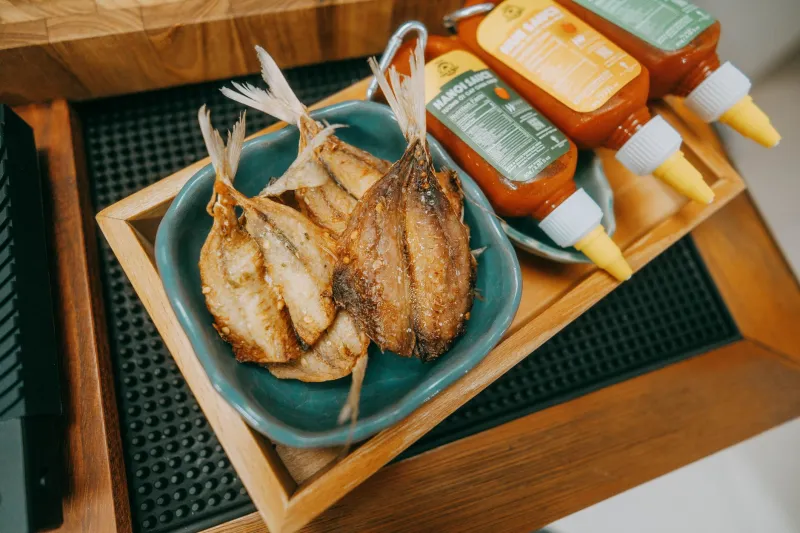
Fish sauce: Yes, it smells intense straight from the bottle. Use it anyway. A teaspoon in a pasta sauce, a stir-fry, or even a Bloody Mary does something that salt alone can't replicate. Start small and work up.
Gochujang: Think of it as a more complex, slightly sweet hot sauce with serious staying power. Mix it with honey, soy sauce, and sesame oil for a marinade that works on everything from tofu to chicken wings. It's also excellent stirred into mayo for a dipping sauce that will make people ask you what your secret is.
Doubanjiang: Spicy fermented bean paste that's the backbone of Sichuan cooking. It's a bit more of a commitment, but a small jar lasts a long time and transforms stir-fries and braises in a way that's hard to describe until you've tasted it.
A Pantry That Tastes Like the World
What's really happening here isn't just a condiment trend. It's a broader shift in how American home cooks are thinking about flavor — less as something you build from scratch every time and more as something you can access through ingredients that have already done the heavy lifting.
Centuries of culinary tradition are packed into these jars and bottles. Korean grandmothers have been fermenting gochujang in clay pots for generations. Japanese brewers have been perfecting miso for over a thousand years. When you add a spoonful to your Tuesday night dinner, you're not appropriating a culture — you're participating in one of the most human things there is: sharing food that tastes good.
At Have Some Swaad, that's the whole point. The world's pantry is enormous, and it's more accessible than ever. All it takes is a willingness to reach for something new and see what it does to your dinner.
Spoiler: it's going to be good.