That Mysterious 'Something' Your Food Is Missing Has a Name — and It's Been There All Along
You've made the recipe exactly as written. You've salted it properly, added enough fat, cooked it to the right temperature — and yet. It's fine. Maybe even good. But it doesn't have that thing. That depth. That pull-you-back-for-another-bite quality that makes certain dishes feel like they were cooked by someone who knows a secret you don't.
Here's the thing: that secret has a name. It's umami. And once you understand what it is and where to find it, your cooking will never be the same.
So What Actually Is Umami?
Most of us grew up learning about four basic tastes — sweet, salty, sour, and bitter. Umami is the fifth, and it took the Western food world an embarrassingly long time to officially acknowledge it. Japanese chemist Kikunae Ikeda identified it back in 1908 while studying kombu seaweed broth, eventually isolating the compound responsible: glutamate. The word itself roughly translates to "pleasant savory taste" in Japanese, which is about as accurate a description as you can get.
Glutamate is an amino acid that occurs naturally in a huge range of foods, and when it hits the receptors on your tongue, it doesn't just register as "savory." It signals something more primal — protein, sustenance, satisfaction. It also has a unique ability to linger on your palate and amplify the other flavors around it. That's why a dish built on umami-rich ingredients doesn't just taste good in the moment; it tastes complete.
The Usual Suspects (and Why They Work)
If you've ever cooked with soy sauce or sprinkled MSG into a dish, you've already been working with umami — you just might not have had the vocabulary for it. But the world of glutamate-rich ingredients goes way deeper than a bottle of Kikkoman.
Miso is one of the most versatile umami powerhouses you can keep in your fridge. This fermented soybean paste from Japan comes in a range of varieties — white (shiro) miso is mild and slightly sweet, while red (aka) miso is aged longer and packs a much more intense punch. Whisk a spoonful into salad dressings, stir it into butter for finishing roasted vegetables, or use it as a marinade base for chicken thighs. The fermentation process concentrates glutamates and adds a layer of complexity that's genuinely hard to replicate with anything else.
Fish sauce might be the most misunderstood ingredient in the American pantry. Yes, it smells intense straight from the bottle. But cooked into a dish — a braise, a stir-fry, a pot of chili — it disappears into the background and leaves behind a savory richness that makes everything taste more like itself. Southeast Asian cuisines have known this for centuries. A splash of fish sauce in your Bolognese? Transformative.
Aged cheeses are umami in a form Americans already love, often without realizing the science behind why. Parmesan, aged cheddar, Gruyère — the longer a cheese ages, the more its proteins break down into free glutamates. That crystalline crunch in a good wedge of Parmigiano-Reggiano? Pure umami. Grating it directly into pasta water, soups, or risotto is one of the easiest flavor upgrades you can make.
Mushrooms, particularly dried varieties like shiitake, porcini, and morel, are another exceptional source. Drying concentrates their glutamate content significantly. The soaking liquid from rehydrated dried mushrooms is essentially a free umami stock — don't pour it down the drain. Strain it and use it as a base for sauces, grains, or braises.
Nutritional yeast has become a staple in plant-based kitchens, but it deserves a spot in every home cook's pantry. Those golden flakes carry a cheesy, nutty flavor that comes directly from their glutamate content. Sprinkle them on popcorn, stir them into mashed potatoes, or use them to add body to vegan soups.
Layering Umami: The Technique That Changes Everything
Understanding umami ingredients is one thing. Knowing how to stack them is where the real magic happens.
Umami compounds don't just add flavor on their own — they interact with each other synergistically. Glutamate (found in most umami-rich foods) pairs particularly well with two other naturally occurring compounds: inosinate (found in meat, fish, and poultry) and guanylate (concentrated in dried mushrooms). When these compounds are combined, the perceived umami intensity multiplies far beyond what any single ingredient could deliver on its own.
In practical terms, this is why a pot of ramen broth made with both pork bones and dried kombu tastes so much more satisfying than either alone. It's why a Caesar salad — anchovies, Parmesan, Worcestershire sauce — hits so differently than a simple vinaigrette. The chef isn't just adding flavors; they're stacking umami signals.
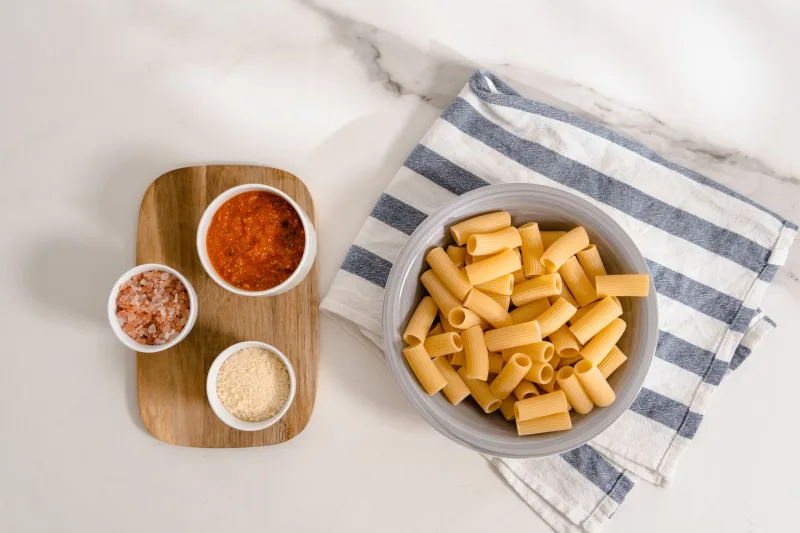
You can apply this same logic to everyday American cooking. Building a weeknight pasta sauce? Start with a soffritto, add a couple of anchovy fillets (they'll dissolve completely — no one will know), deglaze with a splash of soy sauce, and finish with a generous handful of grated Parmesan. That's four distinct umami sources working together, and the result is a sauce that tastes like it simmered all day even if it didn't.
Roasting vegetables? Toss them with a miso-and-olive-oil mixture before they hit the oven. The miso caramelizes beautifully and gives your Brussels sprouts or carrots a savory depth that salt alone can't achieve.
Making a burger? Mix a small amount of fish sauce directly into the ground beef before forming the patties. The result is juicier, more flavorful, and — here's the kicker — more beefy tasting, because you've amplified the meat's own natural glutamates.
A Word on MSG
It would be incomplete to talk about umami without addressing MSG directly. Monosodium glutamate is simply the sodium salt of glutamic acid — chemically identical to the glutamate that occurs naturally in tomatoes, Parmesan, and miso. The decades-long stigma around it was rooted in bad science and, frankly, some ugly cultural bias. Food writers, chefs, and scientists have largely corrected the record: MSG is safe, effective, and one of the most efficient ways to add umami to a dish.
You can find it at most grocery stores (look for Ac'cent or the Ajinomoto brand) and at any Asian market. A tiny pinch in scrambled eggs, soups, or popcorn seasoning makes an immediate, noticeable difference. It's not cheating. It's understanding your ingredients.
Start Small, Taste Often
The best way to get comfortable with umami is to start experimenting with one new ingredient at a time. Buy a small tub of white miso and spend a week finding ways to use it. Pick up a bottle of fish sauce and add a half-teaspoon to the next savory dish you make. Grab a block of Parmigiano-Reggiano and taste it on its own before you grate it into something.
Pay attention to how your food changes. Notice when a dish feels complete versus when it needs something — and start asking whether that something might be umami. Once you develop that awareness, you'll find yourself reaching for these ingredients instinctively, layering them the way experienced cooks do without even thinking about it.
That pull-you-back-for-another-bite quality? It's yours to create. You just needed the right vocabulary to get there.