From Tokyo Labs to American Tables: The Fifth Taste That Changed Everything

Somewhere between your first bite of a perfectly aged cheddar and the moment you couldn't stop eating that "simple" pasta your friend made, umami was doing the heavy lifting. You probably didn't call it that. You called it depth, richness, that thing — the flavor that makes a dish feel finished rather than flat. But it had a name long before most Americans learned to say it out loud.
Umami is the fifth taste. Not sweet, not salty, not sour, not bitter — something else entirely. And the story of how a concept born in a Japanese laboratory over a century ago quietly rewired the way America cooks is one of the most fascinating journeys in culinary history.
A Scientist, a Seaweed Broth, and a Breakthrough
In 1908, a Tokyo Imperial University chemist named Kikunae Ikeda sat down to a bowl of dashi — that deceptively simple Japanese broth made from kombu seaweed — and had what you might call an obsessive thought: what exactly is making this taste so good? He isolated glutamate, the amino acid responsible for the broth's savory, lingering richness, and named the sensation it produced "umami," from the Japanese words for "delicious" and "taste."
For decades, the Western food science community largely shrugged. The four-taste model (sweet, salty, sour, bitter) had been gospel since ancient Greece, and adding a fifth felt like culinary heresy. It wasn't until 2001 that researchers at the University of Miami confirmed dedicated umami taste receptors on the human tongue, finally giving Ikeda's discovery the scientific legitimacy it deserved. By then, American restaurant kitchens had already been quietly exploiting umami for years — they just didn't have the vocabulary for it.
The Surprising Umami You've Been Eating Your Whole Life
Here's the part that tends to blow people's minds: umami isn't exotic. It's already all over the American table, hiding in plain sight.
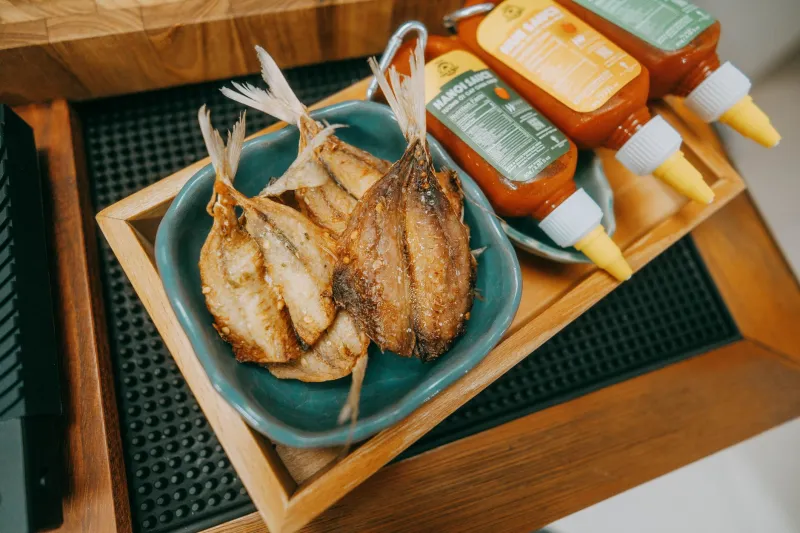
That bottle of Worcestershire sauce in the back of your fridge? Loaded with umami, thanks to fermented anchovies and tamarind. The ketchup you put on everything? Tomatoes are one of the richest natural sources of glutamate on the planet, and cooking concentrates it further. Parmesan cheese — the stuff you shake over pasta — is essentially an umami bomb, with glutamate levels that rival even soy sauce. Sun-dried tomatoes, mushrooms, anchovies, miso, aged meats, even a good fish sauce: all of it is umami, just wearing different cultural clothes.
This is actually one of the most exciting things about understanding the fifth taste. It's a bridge. Once you recognize umami as a universal flavor principle rather than a specifically Japanese one, you start seeing connections between cuisines that seem worlds apart. The Worcestershire in a British Bloody Mary. The fermented shrimp paste in a Thai curry. The slow-roasted tomato base in an Italian Sunday gravy. They're all doing the same thing — stacking glutamates to create that deep, mouthwatering, stay-with-you quality that makes food feel worth the effort.
Why Umami Matters More Now Than Ever
American home cooking has been in the middle of a quiet flavor revolution for the past decade. Pantries that once held little more than garlic powder and Italian seasoning now routinely stock miso paste, fish sauce, gochujang, and nutritional yeast. And while food media deserves some credit for that shift, umami is the underlying reason those ingredients work so well once people try them.
When you add a spoonful of white miso to a pot of butternut squash soup, you're not making the soup taste Japanese — you're amplifying the soup's own savory qualities and rounding out its sweetness. When a splash of fish sauce goes into a Bolognese (a trick that's been quietly circulating in serious home cook circles for years), it doesn't make the sauce taste like Southeast Asia. It makes it taste more deeply, unmistakably Italian — because it's feeding the same flavor receptors that slow-simmered beef and tomatoes were already activating.
That's the real power of understanding umami: it makes you a more intuitive cook across every cuisine you attempt.
Building Umami Into Your Everyday Cooking
You don't need a culinary degree or a specialty grocery store to start cooking with umami in mind. Here are some practical ways to work it into your regular rotation:
Layer your bases. Before you add liquid to a soup, stew, or braise, let your aromatics — onions, garlic, celery — cook long enough to develop color. That browning process (the Maillard reaction) generates glutamates naturally. You're building umami before a single specialty ingredient touches the pot.
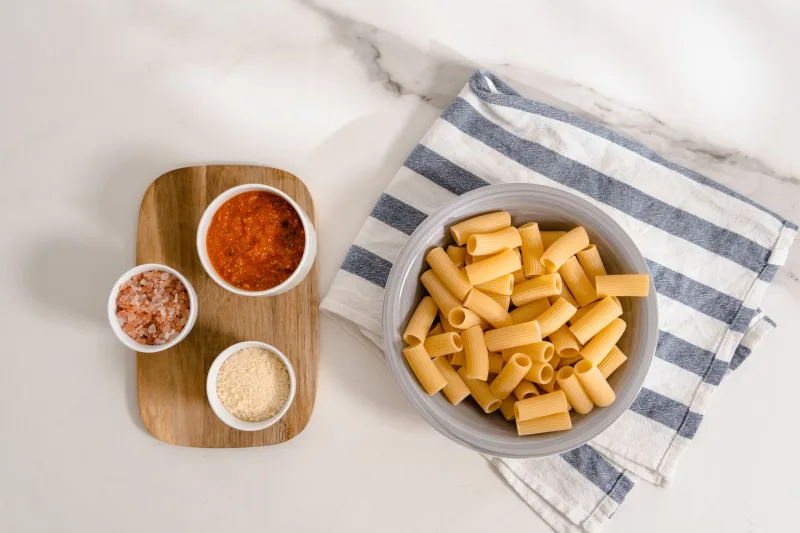
Use tomato paste strategically. A tablespoon of tomato paste cooked in oil for a minute or two before anything else hits the pan is one of the easiest umami upgrades in home cooking. It works in pasta sauce, chili, shakshuka, even scrambled eggs.
Keep miso in your fridge. White (shiro) miso is the most versatile starting point — mild enough to use in salad dressings, marinades, compound butter, and roasted vegetables without overwhelming anything. It adds a gentle, savory complexity that's hard to replicate with anything else.
Don't skip the parmesan rind. If you're making a soup or broth and you have a parmesan rind in your freezer (you should absolutely be saving these), drop it in. As it simmers, it releases glutamates slowly into the liquid, adding a richness that makes the whole pot taste like it's been cooking for hours longer than it has.
Dried mushrooms are pantry gold. Porcini, shiitake, even a basic dried mushroom blend — a small handful rehydrated and chopped adds enormous depth to grain dishes, pasta, and braises. The soaking liquid is valuable too; strain it and use it as a base.
The Cultural Conversation Umami Started
Beyond the practical kitchen applications, the mainstreaming of umami in America has opened up a broader conversation about how we understand and talk about flavor — and whose culinary frameworks we've historically centered. For a long time, Western food science dismissed taste experiences that didn't fit neatly into its four-category model. Ikeda's discovery sat on the margins of serious food discourse for nearly a century, in part because it came from outside the European culinary tradition.
The fact that umami is now taught in culinary schools, discussed in mainstream food media, and stocked in the form of MSG (yes, MSG — which is simply the isolated sodium salt of glutamic acid and has been repeatedly vindicated by food science) at grocery stores across the country represents something bigger than a flavor trend. It's a small but meaningful acknowledgment that some of the most important insights about how taste actually works came from somewhere other than France or Italy.
At Have Some Swaad, that's the kind of story we love most: the one where following flavor leads you somewhere you didn't expect, and leaves you with a deeper appreciation for both the science of eating and the cultures that figured it out first.
So next time a dish hits different and you can't quite explain why — taste it again. Umami's probably in there, doing what it's always done. You just finally know what to call it.