Your Favorite Spices Are Moving — And Your Pantry Needs to Keep Up
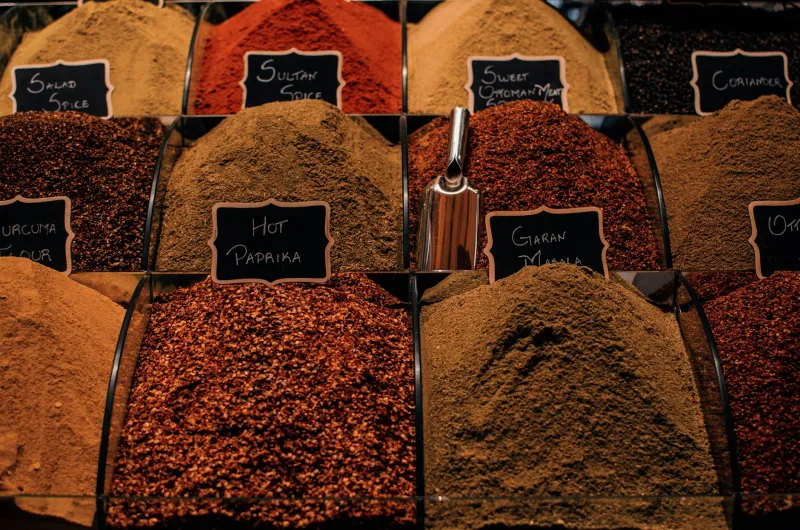
There's something almost poetic about the fact that humans have been fighting over spices for centuries — wars were waged, trade routes carved through deserts and oceans, entire empires built on the backs of cinnamon and pepper. And now, just when we've gotten comfortable, just when vanilla extract is a grocery store staple and saffron threads show up in suburban spice aisles, the land itself is pushing back.
Climate change isn't just a story about melting ice caps and rising seas. For anyone who cooks — and especially for those of us who love chasing authentic global flavors — it's increasingly a story about taste. About where flavor comes from, and what happens when those places start to change beyond recognition.
The Vanilla Crisis You Probably Didn't Hear About
Let's start with vanilla, because nothing makes the stakes clearer. Madagascar produces roughly 80% of the world's vanilla, and the delicate Vanilla planifolia orchid is extraordinarily sensitive to its environment. Over the past decade, the island has been battered by increasingly severe cyclones — Cyclone Enawo in 2017 wiped out a huge portion of the crop almost overnight, sending global vanilla prices to levels that made it briefly more expensive by weight than silver.
Farmers are now experimenting with higher-altitude plots to escape the worst of the storm damage, but moving vanilla cultivation isn't simple. The orchid requires hand-pollination, specific humidity levels, and years before a vine produces a meaningful yield. Meanwhile, food companies and home bakers have been quietly pivoting toward synthetic vanillin or sourcing from emerging producers in Uganda, Papua New Guinea, and even parts of Mexico — which is, interestingly, where vanilla originated before colonial trade routes transplanted it to Madagascar in the first place.
For American cooks, this matters because the flavor profile genuinely differs. Madagascan vanilla has that rich, creamy, almost buttery depth we associate with "classic" vanilla. Tahitian vanilla skews more floral. Mexican vanilla carries a subtle spice note. As sourcing shifts, the vanilla in your pantry might taste slightly different from one year to the next — not worse, just different. Worth paying attention to.
Pepper's Precarious Future
Black pepper is so fundamental to American cooking that we put it on the table next to the salt shaker without a second thought. But the Malabar Coast of India — the original heartland of black pepper, the region that made Venice rich and sent Vasco da Gama sailing — is facing erratic monsoon patterns, longer dry spells, and new fungal diseases that thrive in the shifting climate. Vietnamese pepper production, which surged to dominate global markets over the past few decades, is grappling with its own water stress issues.
The flavor geography of pepper is already quietly shifting toward newer growing regions in Sri Lanka, Brazil, and parts of East Africa. Brazilian pepper, in particular, has been gaining ground, though it tends toward a sharper, less complex heat than the layered warmth of traditional Indian varieties. If you're someone who cooks a lot of South Asian food and relies on that specific peppery backbone, it might be worth seeking out single-origin pepper while you can — and getting curious about what the alternatives actually taste like on your tongue.
Saffron: Red Gold Under Pressure
Kashmir and Iran have long split the title of world's finest saffron between them. Both regions are now under serious environmental stress. Iran, the dominant global producer, has seen dramatic drops in rainfall across its saffron-growing provinces, forcing farmers to drill deeper for water or abandon cultivation entirely. Kashmir's situation is complicated by a mix of climate shifts and ongoing political instability.
The quiet winners here might surprise you: Spain's La Mancha region is holding on, and there's genuinely exciting work being done by small saffron farms in the American Southwest — yes, really. Arizona and parts of New Mexico have been experimenting with Crocus sativus cultivation, and while volumes are tiny, the quality has raised eyebrows. Afghan saffron, which has been promoted as an alternative cash crop to poppy cultivation, is also increasingly available and often excellent. If you haven't compared saffrons side by side in a risotto or a pot of biryani, it's a genuinely illuminating cooking experiment.
Cinnamon's Identity Problem Gets Complicated
Here's one most American cooks don't know: the cinnamon in your spice cabinet is almost certainly not "true" cinnamon. What we typically buy is cassia, a related but distinct spice primarily grown in Indonesia and China. True Ceylon cinnamon (Cinnamomum verum) comes from Sri Lanka and has a lighter, more delicate, almost citrusy flavor.
Climate pressure is affecting both. Indonesian cassia-growing regions are dealing with intensifying rainfall and soil erosion. Sri Lanka's cinnamon belt faces temperature increases that are pushing optimal cultivation zones toward higher elevations. The upshot for home cooks: the flavor character of commodity cinnamon could gradually shift, and the price premium on Ceylon cinnamon may grow as production becomes more constrained. Stocking up on the real stuff from a reputable spice merchant — and learning to appreciate the difference — is both a practical move and a genuinely delicious education.
So What Does a Climate-Aware Pantry Look Like?
None of this is a reason to panic or give up on cooking with spices you love. But it is a reason to cook with more curiosity and a little more flexibility. A few practical shifts worth considering:
Buy from transparent sources. Spice companies that list origin, harvest year, and growing region on their packaging aren't just being fancy — they're giving you information that actually matters. Brands like Burlap & Barrel, Diaspora Co., and Daphnis and Chloe have built their entire model around traceable, single-origin spices. You'll pay more, but you'll taste the difference.
Embrace the emerging regions. Ugandan vanilla, Afghan saffron, Guatemalan cardamom — these aren't consolation prizes. They're genuinely interesting flavors with their own personalities. Cooking with them is a form of culinary exploration, which is kind of the whole point of what we do here.
Learn to adjust by taste, not just by recipe. If the cinnamon you bought this year is a little more pungent than last year's, use slightly less. If your vanilla feels milder, steep the bean rather than just using extract. Cooking has always required tasting and adjusting — climate change just makes that skill more essential.
Grow what you can. Herbs are the obvious one, but adventurous gardeners in the right climates are successfully growing ginger, turmeric, and even small amounts of specialty peppers at home. It's a connection to where flavor actually comes from that no amount of grocery shopping can replicate.
The spice trade never really ended — it just kept evolving, century after century, shaped by politics and economics and now, increasingly, by a warming planet. The flavors we love aren't going away. They're just moving, changing, finding new homes. Our job as cooks is to stay curious enough to follow them.