Not All Heat Is Created Equal: The Real Reason Some Peppers Burn Your Lips and Others Torch Your Throat
Let's be honest. The Scoville scale has been doing a lot of heavy lifting for a long time, and it's kind of underselling the story.
Sure, it tells you that a habanero clocks in somewhere around 100,000–350,000 Scoville Heat Units and a jalapeño sits comfortably around 2,500–8,000. But what it doesn't tell you is where you'll feel the burn, how long it'll stick around, or why the heat from a Sichuan dish feels so completely different from the heat in a plate of Nashville hot chicken. Those are the details that actually matter when you're cooking — and eating.
So let's dig into the real language of heat.
Capsaicin Is the Star, But It's Not the Whole Cast
When most people think about pepper heat, they think capsaicin. And they're not wrong — capsaicin is the primary compound responsible for the burn in chili peppers, and it binds to a specific pain receptor in your body called TRPV1. That receptor is the same one that responds to actual heat, which is why eating spicy food literally feels like your mouth is on fire. Your nervous system isn't being dramatic. It's genuinely confused.
But capsaicin isn't the only player. There's actually a whole family of related compounds called capsaicinoids, and different peppers contain different ratios of them. Dihydrocapsaicin, for example, tends to produce a longer-lasting, deeper burn that settles in the throat. Nordihydrocapsaicin, on the other hand, delivers a milder, more fleeting sensation that's more front-of-mouth. The specific blend of capsaicinoids in a given pepper variety shapes not just how hot it is, but how that heat behaves.
And then there's piperine — the compound responsible for the heat in black pepper. Piperine also activates TRPV1, but it does so in a slightly different way, producing a sharper, more punctuated heat that dissipates faster. That's why cracking fresh black pepper over a dish gives you a little pop of warmth rather than a slow creep.
Galangal and ginger bring their own heat compounds to the table too — gingerols, shogaols, and paradols — which trigger a warming sensation that feels almost medicinal compared to the aggressive punch of capsaicin. These are the kinds of compounds that make a bowl of Thai tom kha feel warming without being aggressive.
Why Thai Chilies Feel Different From Mexican Ones
If you've cooked across different culinary traditions, you've probably already noticed that the heat in a Thai green curry hits differently than the heat in a bowl of posole. That's not your imagination.
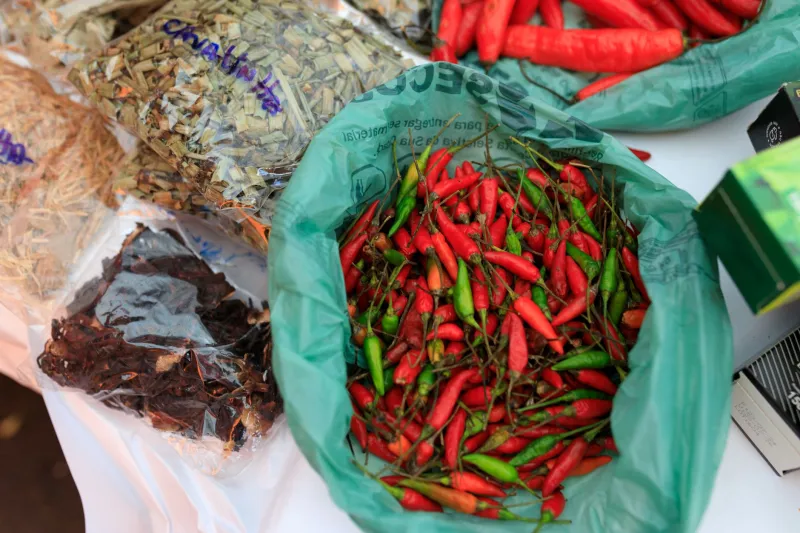
Thai bird's eye chilies — small, ferocious, and deceptively innocent-looking — deliver a fast, high-pitched heat that tends to land right on the tip and sides of the tongue before spreading quickly. It's intense, it's immediate, and it fades relatively fast.
Mexican dried chilies like anchos, guajillos, and pasillas work in a completely different register. The drying process actually transforms the capsaicinoid profile of a pepper — it concentrates certain compounds while others break down or change. The result is a heat that's slower to arrive, deeper in the palate, and often accompanied by complex flavor notes like chocolate, dried fruit, or smoke. You're not just getting heat. You're getting a whole mood.
Then there's the numbing heat of Sichuan cuisine, which is a category unto itself. The infamous mala flavor profile combines dried chilies (usually facing heaven peppers or similar varieties) with Sichuan peppercorns. Those peppercorns don't actually contain capsaicin — they contain a compound called hydroxy-alpha-sanshool, which triggers a tingling, buzzing, almost electric numbness. When you layer that sensation on top of chili heat, you get something that's genuinely unlike anything else in the world of spice. The numbness actually makes your mouth more receptive to the heat, which is why mala dishes feel so overwhelmingly intense.
How Your Body Adapts (And Why Spice Tolerance Is Real)
Here's something that might be reassuring if you've ever felt like you'd never survive a proper Thai meal: your heat tolerance isn't fixed. TRPV1 receptors can be temporarily desensitized with repeated exposure, which is the physiological basis for what spice lovers call "building a tolerance."
But here's the more interesting part — you can adapt to one type of heat without necessarily adapting to another. Someone who eats a lot of Mexican food might be well-calibrated for the slow, deep burn of dried chilies but still get floored by the sharp immediacy of Korean gochugaro or the electric tingle of Sichuan peppercorns. The nervous system adapts to specific stimuli. Exposure to capsaicin doesn't automatically prepare you for sanshool.
This is actually why culinary traditions from different parts of the world have developed such distinct approaches to heat management. In cuisines where chili heat is central — like those of South India, the Yucatán, or Hunan province — you'll also find cooling agents built into the same dishes. Coconut milk, yogurt-based sauces, and fresh herbs all help manage the capsaicin experience. Dairy fat is particularly effective because capsaicin is fat-soluble, meaning the fat literally helps clear it from your receptors faster.
A Practical Guide for Home Cooks Exploring Global Peppers
So how do you actually use this knowledge in your kitchen? A few things to keep in mind:
Start with dried Mexican chilies. Anchos, mulatos, and pasillas are forgiving, deeply flavored, and relatively mild. They're a great entry point into understanding how heat can be layered with flavor rather than existing independently of it. Toast them dry in a skillet before rehydrating — it makes a real difference.
Respect the Thai bird's eye. These little guys are not proportional in heat to their size. When a recipe calls for one, it means one. You can always add more at the table.
Treat Sichuan peppercorns as a separate ingredient category. Don't think of them as a substitute for black pepper or chili. They're doing something else entirely. Start by dry-toasting them and adding a small amount to a stir-fry to understand the tingle before you go all in on a full mala dish.
Fresh versus dried is not an upgrade or downgrade — it's a different ingredient. A fresh jalapeño and a chipotle are both jalapeños at different stages of their lives, and they behave completely differently in a dish. Same goes for fresh versus dried Thai chilies, fresh versus dried Korean peppers, and so on.
Pay attention to where the heat lands. Next time you eat something spicy, notice whether you feel it on the tip of your tongue, the back of your throat, your lips, or your sinuses. That information is actually useful — it tells you what compounds you're dealing with and how long the experience is going to last.
Heat as a Flavor Language, Not Just a Dial
Once you stop thinking about spiciness as a single-axis spectrum from mild to nuclear, a whole world opens up. Heat becomes a texture, a location, a duration. It becomes something you can layer, balance, and use intentionally — the way a good cook uses salt or acid.
Every culture that has built a cuisine around chili heat has essentially developed its own dialect of that language. Thai food says something different with its chilies than Oaxacan food does, even when they're both technically "hot." Learning to hear the difference is one of the more rewarding things you can do as a home cook who wants to cook globally with any real depth.
Your palate is more sophisticated than the Scoville scale gives it credit for. Trust it.