The Restaurant Gap: Why That Dish Never Tastes the Same When You Make It at Home
It happens to everyone. You eat something at a restaurant that genuinely changes your life — a silky bowl of ramen, a perfectly charred plate of pad Thai, a butter chicken so good you actually close your eyes — and you think: I need to learn how to make this. You find a recipe. You follow it carefully. You taste the result and it's... fine. Maybe even good. But it's not that. It doesn't have that thing.
This experience is so common it's almost a culinary rite of passage, and yet the reasons behind it are rarely explained clearly. It's not about skill. It's not about effort. It's about a set of structural differences between professional kitchens and home kitchens that most recipes don't acknowledge — and that most chefs don't bother to explain.
Let's break it down.
The Heat Problem Is Real, and It's Bigger Than You Think
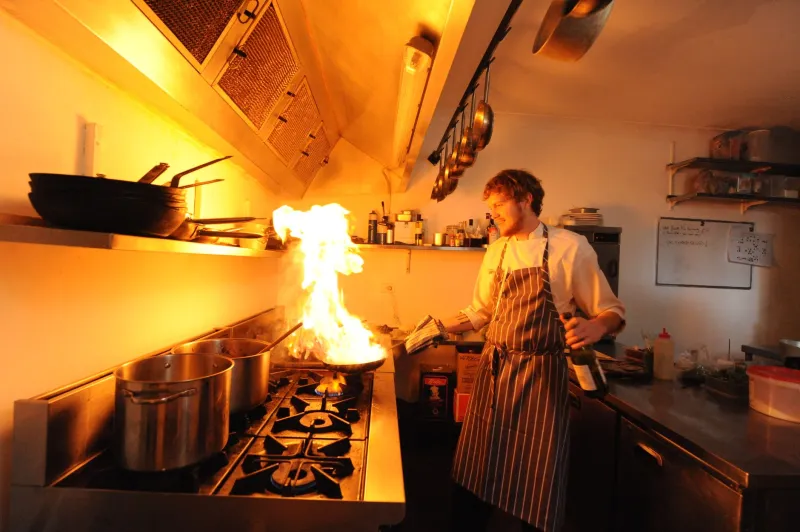
The single biggest factor separating restaurant cooking from home cooking is heat. Commercial ranges output somewhere between 25,000 and 35,000 BTUs. The average home gas range? About 7,000 to 12,000. That's not a minor difference — it's a completely different cooking environment.
High heat does things to food that moderate heat simply cannot replicate. The Maillard reaction — that beautiful browning that creates complex, roasty, savory flavors — happens faster and more intensely at higher temperatures. When a restaurant chef stir-fries vegetables in a wok over a commercial flame, they're achieving what Chinese cooks call wok hei: a slightly smoky, caramelized depth that results from super-high heat moving food quickly through extreme temperatures. At home, even with a decent wok, you're working at a fraction of that intensity. The food steams slightly instead of searing. The result is still good, but it's missing that edge.
The practical workaround: work in smaller batches than you think you need to, always preheat your pan longer than feels reasonable, and don't be afraid of using your broiler or even a kitchen torch for finishing. Cast iron and carbon steel pans hold heat better than stainless and will give you a closer approximation of commercial sear. It's not identical, but it closes the gap meaningfully.
The Ingredient Reality Nobody Talks About
Restaurants don't always use the same version of an ingredient that you'd find at a regular grocery store — and sometimes the difference is significant. A few examples:
Fish sauce: The brands available at mainstream American grocery stores are often heavily diluted compared to the premium bottles you'll find at Asian specialty markets, or what a Vietnamese or Thai restaurant kitchen is actually using. The flavor concentration is just different.
Butter: Many professional kitchens use European-style butter with a higher fat content (84% vs the standard American 80%), which makes sauces richer and pastry more tender. It's available at most grocery stores — brands like Kerrygold are widely sold — but it's not what most recipes assume you're using.
MSG: Yes, really. A lot of restaurant cooking, across many different cuisines, involves MSG either directly or through high-glutamate ingredients. It's not a dirty secret — it's just not something that gets mentioned in home recipe adaptations, partly due to decades of unfair stigma. That slightly ineffable savory depth you keep chasing? Sometimes it's just glutamate.
Stock vs. water: Restaurants rarely cook with plain water. Pasta water aside, the liquid base in most restaurant dishes is some form of stock, often made in-house and reduced to a concentration that adds body and flavor to everything it touches. When a recipe says "a cup of chicken broth," it's probably assuming a richer, more gelatinous stock than the watery stuff in most grocery store cartons.
Technique Gaps That Recipes Gloss Over
Professional cooks go through years of training that home recipes compress into a single instruction like "sauté until softened." What that instruction actually contains is a whole world of judgment calls — about heat level, about when to add fat, about how to move the pan, about what "softened" actually looks and smells like at the right moment.
One of the most commonly skipped techniques is properly building a sauce from the fond — the browned bits left in a pan after searing meat or vegetables. Those bits are pure concentrated flavor, and deglazing them with wine, stock, or even just water and scraping them up is something restaurant cooks do almost automatically. Many home recipes either skip this step or bury it in a way that doesn't convey how important it is.
Seasoning throughout cooking, not just at the end, is another one. Restaurant cooks taste constantly and adjust as they go, layering salt at multiple stages rather than dumping it in at the finish. The result is food where the seasoning feels integrated rather than applied. If your home-cooked version tastes slightly flat even after you've added salt at the end, this is probably why.
The Mise en Place Mindset
Here's a cultural difference that doesn't get enough credit. Professional kitchens run on mise en place — everything prepped, measured, and organized before cooking begins. Home cooks often prep as they go, which means they're chopping onions while something is already in the pan, or scrambling to find the fish sauce while the garlic is burning.
This isn't just an efficiency issue. It changes the cooking itself. When you're not rushed, you make better decisions. You notice when the onions need another minute. You catch the moment when the sauce is exactly right before it goes too far. Slowing down the prep stage so you can be fully present during the cooking stage is one of the most underrated improvements any home cook can make.
Closing the Gap (Without a Commercial Kitchen)
None of this is meant to be discouraging. The goal isn't to replicate a restaurant dish perfectly — it's to understand why it tastes the way it does, so you can make informed choices about how to approach it at home.
Sometimes that means sourcing a better ingredient. Sometimes it means adjusting your technique. Sometimes it means accepting that a dish designed for a commercial wok and a 30,000 BTU flame is going to taste slightly different on your home stove — and that's okay. The version you make at home can still be genuinely delicious. It's just a different kind of delicious, made in a different kind of kitchen, for a different kind of meal.
And honestly? There's something in that worth celebrating too.