Your Farmer's Market Is the New Silk Road — If You Know Where to Look
The Saturday Morning Revolution Nobody's Talking About
Most people show up to their local farmers market for the tomatoes. Maybe the honey. Possibly a loaf of sourdough that costs more than it probably should. And that's fine — those things are great. But if that's all you're doing, you're leaving some seriously interesting food on the table.
Over the past decade, something has been quietly happening at markets across the country. Tucked between the flower stands and the jam vendors, a new kind of seller has been showing up — farmers, importers, and small-batch producers bringing ingredients that most American grocery stores wouldn't touch. Lemongrass grown in Georgia. Fresh turmeric root from Florida. Bitter melon, dragon tongue beans, shiso leaves, and dried chiles you'd normally have to order online or hunt down at a specialty shop two towns over.
The spice trade never really ended. It just changed its zip code.
Who's Actually Growing This Stuff?
A lot of the movement is being driven by immigrant farming communities who have spent years quietly cultivating what they know — and what their home cuisines demand. Vietnamese, Hmong, West African, and South Asian farmers in particular have been instrumental in introducing unfamiliar produce to American markets, often starting by selling to their own communities before branching out.
At the Hmong Village Farmers Market in St. Paul, Minnesota — one of the largest and most culturally rich markets in the Midwest — vendors regularly sell ingredients like bitter melon, galangal, banana blossoms, and several varieties of Asian eggplant that you'd be hard-pressed to find anywhere else in the region. It's a full sensory experience, and it's become a destination for chefs and curious home cooks alike.
In the South, particularly in Georgia and the Carolinas, small farms run by Latinx growers have introduced varieties of squash, peppers, and herbs that don't show up in any mainstream seed catalog. Some of these crops have been passed down through generations, seeds carried across borders and planted in American soil.
These aren't novelty items. They're living culinary traditions.
The Ingredients Worth Getting Excited About
So what should you actually be looking for? Here's a starting point — not a complete list, because the whole point is that every market is different, and the discovery is part of the fun.
Fresh turmeric root looks like a smaller, more orange version of ginger, and it's showing up at markets in Florida, California, and Hawaii. Grate it fresh into rice dishes, blend it into a golden milk base, or slice it thin and pickle it. The flavor is earthier and more complex than the dried powder most of us know.
Shiso (also called perilla) is an herb that straddles the line between mint and basil, with a slightly anise-forward edge. It's common in Japanese and Korean cooking and increasingly available from small herb growers at urban markets. Use it as a wrap for grilled meats, torn into salads, or blended into a surprisingly good pesto.
Bitter melon is polarizing — genuinely, aggressively bitter — but it's a staple in South Asian, Southeast Asian, and Chinese cuisines for a reason. Stuffed with spiced ground meat and braised, or stir-fried with eggs and fermented black beans, it's one of those ingredients that rewards patience.
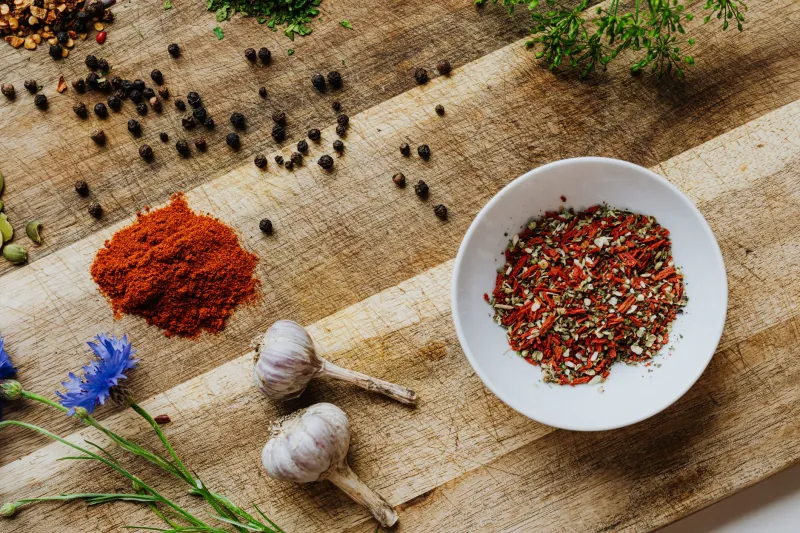
Dried Calabrian chiles, Aleppo pepper flakes, and Urfa biber have been creeping onto market tables thanks to specialty importers and small-batch spice sellers who are increasingly finding a home at farmers markets rather than just online. These aren't interchangeable with standard red pepper flakes — each has its own heat level, oil content, and flavor complexity.
Moringa leaves, sometimes called the drumstick tree, are common in South Asian and African cooking and have started appearing at markets in warmer states. The fresh leaves can be sautéed like spinach; the dried powder gets stirred into smoothies and sauces.
How to Actually Talk to the Vendors
Here's something that sounds obvious but is genuinely underrated: just ask. The people selling unfamiliar produce at farmers markets are almost always the most knowledgeable people in the building about how to use it. They've been cooking with this stuff their whole lives.
Don't walk up and say "what is this?" with a vaguely suspicious look. Walk up and say "I've never cooked with this before — how do you use it at home?" That one shift in framing changes the whole conversation. You'll get recipes, technique tips, and sometimes a sample. You might also get a 20-minute conversation about your vendor's grandmother's kitchen, which, honestly, is worth the trip on its own.
If there's a language barrier, pointing and smiling still works. Most vendors who sell at public markets are used to navigating that — and a lot of them have homemade signs or printed cards with basic preparation notes.
Building a Pantry That Actually Reflects the World
One of the more practical outcomes of regular farmers market exploration is that your pantry starts to tell a more interesting story. Instead of the same five spices you've had since 2019, you end up with fresh galangal you froze in chunks, a jar of dried shiso flakes, and a bag of Aleppo pepper that you've started putting on everything from scrambled eggs to roasted carrots.
The key is buying small and experimenting fast. Don't buy a pound of something unfamiliar and let it sit in a drawer for six months. Buy a small amount, look up two or three traditional uses, and try one of them that same week. Even if it doesn't work perfectly the first time, you'll have learned something — and you'll have a much better conversation with the vendor next week.
The Bigger Picture
There's something meaningful happening at these markets beyond just the ingredients themselves. When a Hmong farmer in Minnesota sells fresh lemongrass to a home cook in the suburbs, or when a West African vendor in Atlanta introduces someone to egusi seeds for the first time, that's not just a commercial transaction. It's a transfer of culinary knowledge that crosses generations and continents.
The old spice trade was about moving ingredients from one part of the world to another — and in the process, it changed the way entire cultures ate. What's happening at American farmers markets right now isn't so different. The scale is smaller. The ships have been replaced by pickup trucks. But the exchange is just as real.
Your Saturday morning just got a lot more interesting.