Forget the Rice Cooker for a Minute: 6 Ancient Grains From Around the World That Will Change How You Think About Your Dinner Plate
Let's be honest about white rice for a second. It's reliable, it's comforting, it's the backbone of probably a billion meals served tonight across the globe. We're not here to cancel it. But if you've been using it as your default grain for every meal without exploring what else is out there, you're leaving a lot of flavor, texture, and genuine culinary adventure on the table.
The world's grain pantry is enormous, and much of it has been largely invisible to mainstream American home cooks — until recently. Walk through a Whole Foods, a specialty grocery, or even a well-stocked Target these days, and you'll find teff flour, farro in the bulk bins, freekeh next to the couscous, and sorghum alongside the cornmeal. These aren't new ingredients. Some of them have been cultivated for ten thousand years. What's new is that American cooks are finally paying attention.
Here's your guide to six grains worth putting in your cart, with a little background on where they come from and some practical ways to get them on your table.
1. Teff — Ethiopia's Ancient Tiny Powerhouse
Where it's from: The highlands of Ethiopia and Eritrea, where it's been cultivated for as long as 6,000 years.
Teff is the smallest grain in the world — a single seed is about the size of a poppy seed — but it carries a flavor that's anything but small. It has a slightly earthy, mildly sweet, nutty taste with a hint of molasses that makes it unlike anything else in the grain aisle. In Ethiopia, teff is ground into flour and fermented to make injera, the spongy, tangy flatbread that serves as both plate and utensil in traditional Ethiopian meals.
For American kitchens, teff flour is a fantastic gluten-free baking ingredient — it makes excellent pancakes and adds depth to chocolate baked goods. Whole teff can be cooked like a porridge (think polenta, but earthier and more nutritious) and topped with honey, fruit, or even a fried egg. It's also one of the most iron-rich grains you can eat, which is part of why it's been sustaining one of the world's great food cultures for millennia.
Try it: Cook 1 cup of whole teff in 3 cups of water with a pinch of salt for about 15 minutes. Stir in butter, a drizzle of honey, and fresh berries for a breakfast that'll make you rethink oatmeal entirely.
2. Farro — The Grain That Built Rome (Literally)
Where it's from: Italy, with roots stretching back to ancient Mesopotamia. Farro was a staple of the Roman legions.
Farro is having a very good decade in the US. You'll find it on restaurant menus from Brooklyn to Portland, tossed into grain bowls and salads with a confidence that suggests it was always supposed to be here. And in a way, it was — farro is an ancient wheat variety (technically a category covering emmer, einkorn, and spelt) that predates modern hybridized wheat by thousands of years.
What makes farro so appealing to cook with is its texture. It has a satisfying chewiness and a nutty, slightly sweet flavor that holds up beautifully in salads — it doesn't get soggy the way pasta does. It also absorbs cooking liquids wonderfully, making it excellent in soups and risotto-style preparations (called farrotto in Italian).
Try it: Cook farro in chicken or vegetable broth instead of water, then toss it warm with roasted cherry tomatoes, fresh basil, crumbled feta, and a good pour of olive oil. It's a grain salad that works as a main course.
3. Quinoa — Peru's Sacred Seed That Became a Global Phenomenon
Where it's from: The Andean highlands of Peru and Bolivia, where the Inca considered it sacred and called it "chisaya mama" — mother of all grains.
Yes, quinoa is already well-known in the US. But it's worth revisiting with fresh eyes, because most Americans are still only using it as a sad salad base when it's capable of so much more. Technically a seed rather than a grain, quinoa comes in white, red, and black varieties — each with slightly different textures and flavor profiles. Red quinoa is nuttier and holds its shape better after cooking. Black quinoa has a slightly earthier bite. White is the mildest and fluffiest.
In the Andes, quinoa has been eaten for over 5,000 years and appears in everything from soups (sopa de quinoa is a comforting, hearty dish) to chicha, a fermented beverage. It's one of the only plant foods that contains all nine essential amino acids, which is part of why Andean communities thrived on it at elevations where other crops struggle to grow.
Try it: Toast dry quinoa in a dry skillet for two to three minutes before cooking it in broth. That one extra step adds a depth of flavor that transforms it from bland to genuinely delicious.
4. Freekeh — The Smoky Grain You've Never Heard Of (But Should)
Where it's from: The Levant and North Africa — particularly Syria, Lebanon, Palestine, and Egypt — with a history stretching back over 2,000 years.
Freekeh is wheat that's harvested while still young and green, then roasted over open flames. The result is a grain with a distinctive smoky, slightly grassy flavor that is completely unlike anything else you've cooked with. It has the satisfying chew of farro but with this additional smokiness that makes it feel almost like it was kissed by a grill.
In Middle Eastern cooking, freekeh is traditionally used in a dish called freekeh with chicken — slow-cooked with spices like cinnamon, allspice, and cumin, topped with toasted nuts. It's a dish that manages to be simultaneously comforting and complex, and it's a perfect introduction to the grain for American cooks.
Try it: Use freekeh anywhere you'd use brown rice in a pilaf. Cook it in chicken broth with a cinnamon stick, then serve it under roasted chicken thighs with a handful of toasted pine nuts and golden raisins.
5. Sorghum — The American South's Forgotten Grain With Deep African Roots
Where it's from: Originally domesticated in northeastern Africa around 8,000 years ago, sorghum traveled to the American South via the transatlantic slave trade and became a significant crop in states like Alabama, Georgia, and Mississippi.
Sorghum is one of those ingredients that has a deeply American story even though most American home cooks barely know it exists. In the South, sorghum syrup (made from the stalk's juice) was a common sweetener before sugar became widely affordable. The grain itself has been used in flatbreads and porridges across sub-Saharan Africa for thousands of years, and in parts of West Africa, a fermented sorghum porridge called ogi remains a staple breakfast.
Sorghum is naturally gluten-free, with a mild, slightly sweet flavor and a pleasantly chewy texture when cooked whole. It works beautifully in grain bowls, stuffed peppers, and soups, and sorghum flour is one of the better gluten-free baking options available.
Try it: Cook whole sorghum (it takes about 45 to 60 minutes, so plan ahead or use a pressure cooker) and use it in place of farro in any grain salad. Its chewiness is genuinely satisfying.
6. Millet — The Grain That Feeds More People Than You Think
Where it's from: West Africa and Asia, where it's been cultivated for at least 7,000 years. It's a staple crop in India, Nigeria, Niger, and China.
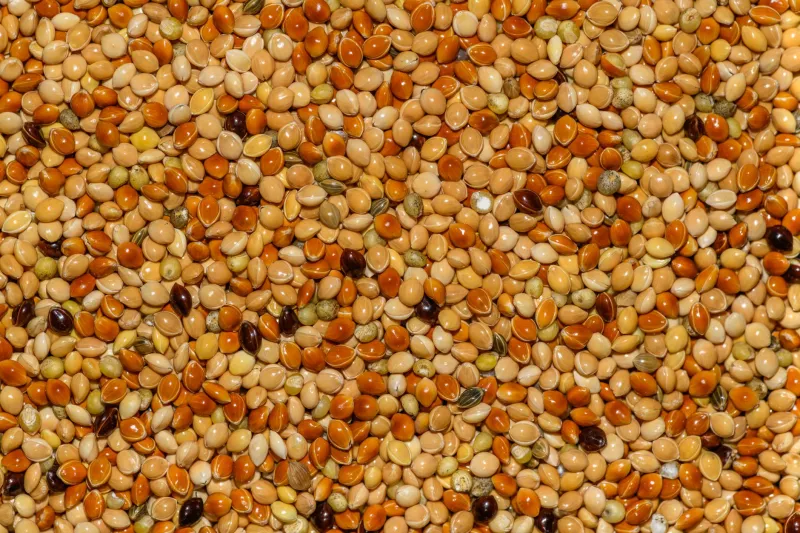
Millet might be the most underrated grain on this list. In the US, most people associate it with birdseed, which is a genuine culinary tragedy. In India, pearl millet (bajra) is ground into flour for hearty flatbreads. In West Africa, it's fermented into porridges and beverages. In parts of China, it's cooked into congee. It's a grain that has fed more of humanity for longer than almost any other, and it deserves a seat at the American dinner table.
Cooked whole, millet has a light, slightly fluffy texture — almost like a cross between couscous and polenta. It can be prepared dry and fluffy for grain bowls or cooked with extra liquid into a creamy porridge. Its mild, slightly corn-like flavor makes it one of the most versatile grains for beginners.
Try it: Cook millet in coconut milk with a pinch of turmeric and salt, then top with sautéed greens, a soft-boiled egg, and a drizzle of chili oil. It's a bowl that feels like it came from somewhere wonderful — because, in a way, it did.
The beauty of exploring these grains isn't just the nutritional payoff or the novelty factor. It's the way each one carries a story — of a landscape, a community, a culinary tradition that figured out how to make something extraordinary from what the earth provided. When you cook with teff or freekeh or sorghum, you're not just making dinner. You're tasting a piece of the world. And that, really, is what Have Some Swaad is all about.