From Samosas to Bao: How One Dough Conquered the Entire Planet
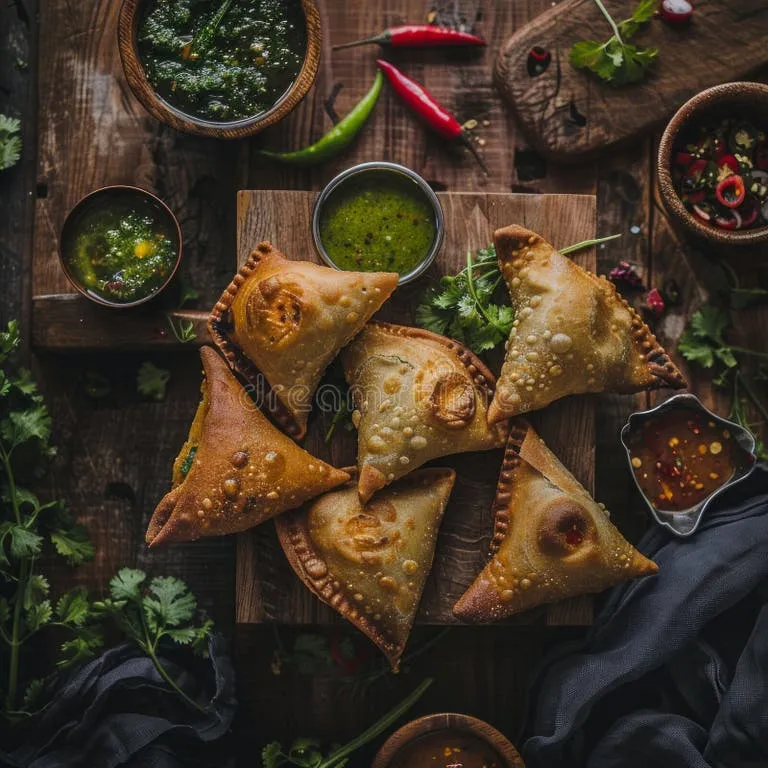
Photo: assorted dumplings empanadas samosas on wooden table, via thumbs.dreamstime.com
Consider the samosa. Now consider the empanada. The pierogi. The dumpling. The bao. The calzone. The Jamaican patty. The Indian gyoza — sorry, the gyoza. The Latin American pasteles. The Nigerian meat pie.
Different continents. Different spices. Different histories, often ones that never touched each other. And yet, across the entire map of human cooking, we arrived at the same answer again and again: take something delicious, wrap it in dough, and cook it.
That's not a coincidence. That's convergence — and it might be the most universal idea in all of food.
Why Every Culture Invented the Pocket
The logic of the pocket food is almost embarrassingly practical. Dough is cheap and shelf-stable. Fillings are precious — meat, vegetables, spices, whatever the season offers. Wrapping one in the other protects the filling, stretches the ingredients, and creates a complete, portable meal you can eat with one hand.
Nomads needed food that traveled. Workers needed lunches that survived a shift. Festivals needed something that could be made in bulk and shared. The pocket food answered all three calls, everywhere, independently.
What's fascinating is how the variations encode culture. The samosa's crisp, brick-like pastry is built for deep frying at street stalls. The empanada's tender, lard-enriched crust is baked golden in Argentine ovens. The pierogi's soft, eggy dough is boiled and then pan-fried in butter — Polish comfort in every step. Same idea, radically different soul.
One Dough, Many Passports
Here's the good news for home cooks: while the fillings vary wildly, the underlying doughs cluster into a few basic families. Master one versatile all-purpose dough and you can pivot it across multiple traditions with minor tweaks.
The Master Dough: Combine 3 cups all-purpose flour, 1 teaspoon salt, 6 tablespoons of fat (butter, lard, or oil), and about ¾ cup warm water. Mix until shaggy, knead briefly, and rest for 30 minutes. That's it.
Now watch what it becomes:
- Roll it thin and fold into triangles → samosas. Fill with spiced potato and peas, then shallow-fry until blistered and crisp.
- Roll into circles, crimp half-moons → empanadas. Brush with egg wash and bake at 400°F until golden. Fill with beef, olives, and hard-boiled egg for the Buenos Aires treatment.
- Keep it soft and pillowy → bao. Add a touch of sugar and baking powder, steam for 12 minutes, and stuff with sticky pork or simply a spoonful of jam.
- Cut into rounds and pinch → pierogi. Boil, then toss in brown butter with onions. Potato-cheese filling optional but strongly encouraged.
- Roll thin, pleat, and steam → dumplings. Pork and chive, mushroom and cabbage — the filling matters less than the fold.
The fat you choose is the main dial. Butter gives you flaky and Western. Oil gives you crisp and lean. More water gives you soft and steamed; less gives you firm and fried. Once you understand those levers, the entire world of pocket food opens up.
The Fillings Tell the Real Story
If the dough is the universal grammar, the filling is the local dialect. Potato and cheese in Poland. Spiced lamb in Central Asia. Ground beef with raisins in Argentina. Sweet red bean in China. Each pocket is a tiny record of what a place grew, raised, and traded.
Which means your own kitchen can write a new entry. Leftover chili in empanada dough. Thanksgiving stuffing in dumpling wrappers. Your grandmother's curry in a hand pie. The format doesn't care where you're from — it never has.
Start This Weekend
Pick one dough. Pick one filling — honestly, anything savory in your fridge works. Make a batch of eight, cook them two different ways, and notice what the technique changes. Then invite a few friends over, put out the wrappers, and let everyone fold their own.
Every culture that ever made a pocket food figured out the same secret: the wrapping is the party. Humans have known it for thousands of years. It might be the oldest dinner hack on Earth.